Ethereum has become one of the most important and influential cryptocurrencies in the world. Since its launch in 2015, it has expanded far beyond a simple digital currency — powering decentralized finance (DeFi), smart contracts, NFTs, and thousands of decentralized applications (dApps). But for many investors, especially beginners, the big questions remain:
- What is the current price of Ethereum?
- Why did Ethereum fall so much?
- Is it a good investment for the future?
- Will Ethereum go up again, and what could make it increase?
- What are the benefits of buying Ethereum now?
In this article, we’ll answer all of these in detail, with clear explanations and professional insight.
1. What Is Ethereum?
Ethereum is more than just a cryptocurrency — it’s a blockchain platform that enables smart contracts and decentralized applications. While Bitcoin aims mainly to be digital money, Ethereum is like a global decentralized computer. Developers build financial apps, games, marketplaces, and everything running without middlemen or banks.
- Ethereum token = ETH
- Used for transactions, fees, and staking
- Powers DeFi, NFTs, DAOs, and more
2. Current Price of Ethereum (As of Latest Data)
As crypto markets constantly change, prices fluctuate daily.
At the time of writing:
 Ethereum price: approx. $2,300 – $2,500 USD per ETH
(Prices may vary slightly based on exchange, global market conditions, and demand.)
This is significantly lower than its all-time high above $4,800 in late 2021, but the price today reflects deeper market trends and investor sentiment.
3. Why Did Ethereum’s Price Fall?
Ethereum’s price decline wasn’t random — several factors contributed:

1. Crypto Market Correction
After the massive bull run of 2021–2022, crypto markets corrected across the board. Bitcoin, ETH, and many altcoins retraced as profit-taking increased and speculative demand cooled.
2. High Interest Rates
Central banks (like the U.S. Federal Reserve) raised interest rates to fight inflation. Higher rates often reduce risk appetite, leading investors to move away from speculative assets like crypto.
3. Reduced Institutional Buying
Institutional buyers — big funds, funds, and companies — slowed down their crypto purchases due to market uncertainty, affecting overall demand.
4. Shifts in DeFi and Network Activity
Ethereum’s price is tied to activity in DeFi, staking, and NFTs. When usage drops or competitors enter, prices can reflect that slowdown.
In simple terms: less demand + more selling pressure = price decline.
4. But Is Ethereum a Good Investment for the Future?
Yes — many analysts and investors believe Ethereum has strong long-term potential, for several reasons:

A. Real, Wide-Scale Use Cases
Ethereum isn’t just a currency — it’s the foundation for:
 DeFi (Decentralized Finance)
Smart contracts
NFTs & digital ownership
DAOs (Decentralized Autonomous Organizations)
Web3 applications
These real usecases mean ETH has utility, not just speculation.
B. The Merge & Staking
Ethereum has transitioned from proof-of-work (PoW) to proof-of-stake (PoS) through the Ethereum Merge. This reduces energy use and allows ETH holders to stake their ETH and earn rewards. This decreases circulating supply — supporting long-term value.
C. Network Upgrades (Layer-2 scaling)
Upgrades like Shard Chains and Layer-2 solutions (Optimism, Arbitrum) improve speed and reduce fees — making Ethereum more efficient and competitive.
D. Institutional Adoption
Big financial players are slowly entering crypto infrastructure, adding credibility. Ethereum’s ecosystem is one of the strongest and most widely used — a key factor for future growth.
5. What Could Make Ethereum’s Price Rise Again?
Several catalysts could push the price higher:
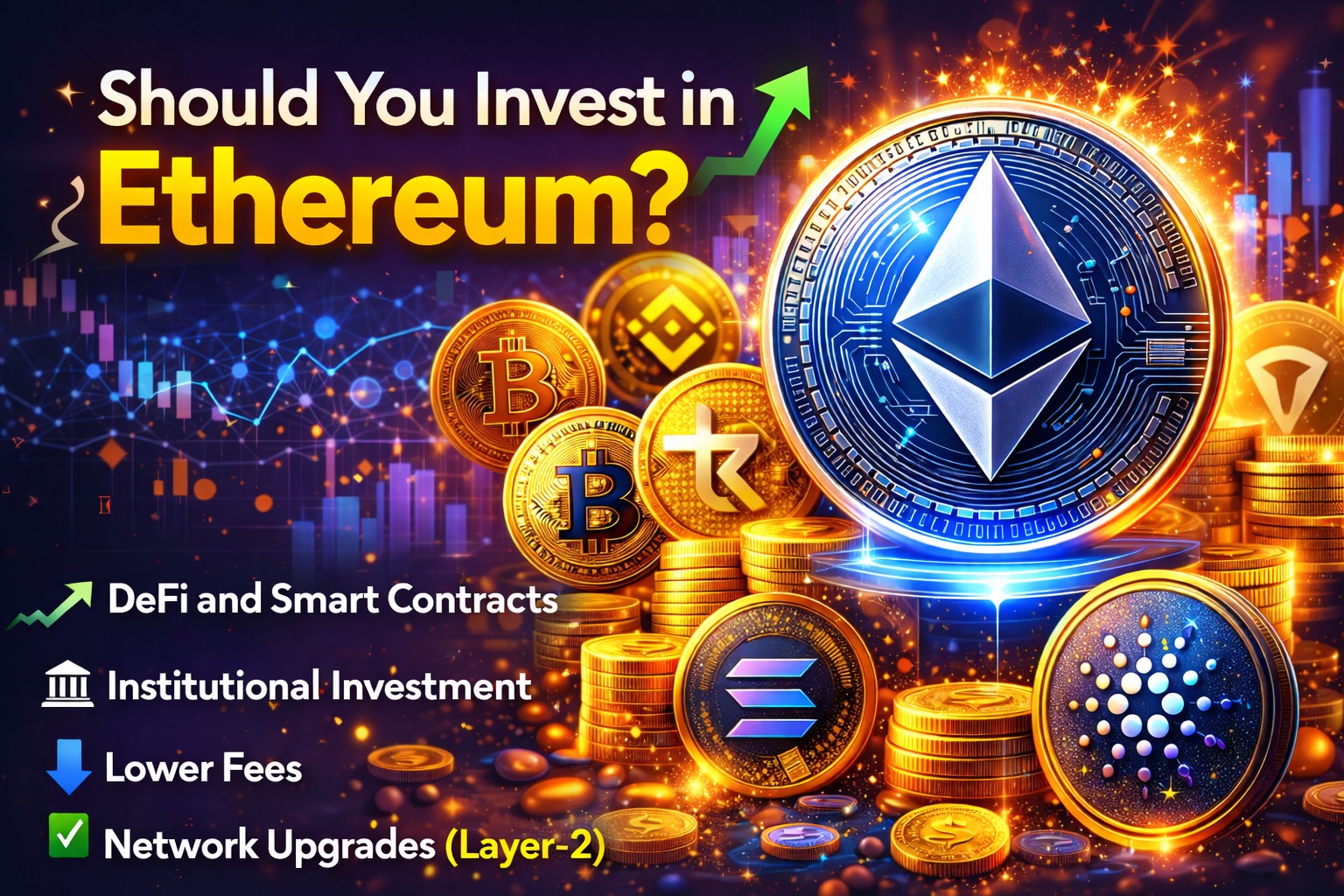
 Higher adoption of DeFi & smart contracts
More institutional investments
Better scalability & lower fees
Growth of Layer-2 networks
Increased staking participation
Global acceptance and regulations becoming clearer
Whenever real usage increases, investor confidence tends to follow.
6. What Are the Risks?
No investment is without risk. Ethereum’s main risk factors include:
 Price volatility
Regulatory uncertainty
Competition (Solana, Cardano, etc.)
Market sentiment swings
Investors should consider risk tolerance, investment horizon, and never invest more than they can afford to lose.
7. Should You Buy Ethereum for the Future?
If you are looking for long-term investment (3+ years):
Many experts say yes. Because:
 Ethereum has real utility
Global demand for DeFi is increasing
Network upgrades improve scalability
Institutional interest is growing
Best strategy:
 Buy in smaller amounts (dollar-cost averaging)
instead of investing all at once — this can reduce risk.
8. Final Thoughts: Why Ethereum Still Matters
Ethereum isn’t just another digital coin — it is the backbone of Web3 innovation. While price corrections can be painful, the long-term adoption trend still looks strong. For investors who believe in decentralized finance, smart contracts, and the future of digital applications, Ethereum offers real utility and growth potential.
Conclusion:
Ethereum today may be lower than peak prices, but that makes it a potential opportunity for future investors who understand its usecases, technology, and long-term growth drivers.