Global oil markets are once again facing strong volatility as geopolitical tensions rise in the Middle East. The ongoing conflict involving Iran has created serious concerns about global energy supply, especially because of threats to one of the world’s most critical oil shipping routes.
Why the Iran Conflict Is Affecting Oil Prices
One of the main reasons oil prices are rising is the disruption around the Strait of Hormuz, a narrow but extremely important waterway between Iran and Oman.
This route is responsible for transporting nearly 20% of the world’s oil supply. Any instability in this region immediately affects global oil markets.
Due to the conflict, several oil tankers have stopped moving through the route, and many shipping companies have temporarily suspended operations because of security risks. This has created fears of supply shortages across the global market.
Current Oil Price Movement
Since the conflict escalated, oil prices have already started climbing sharply.
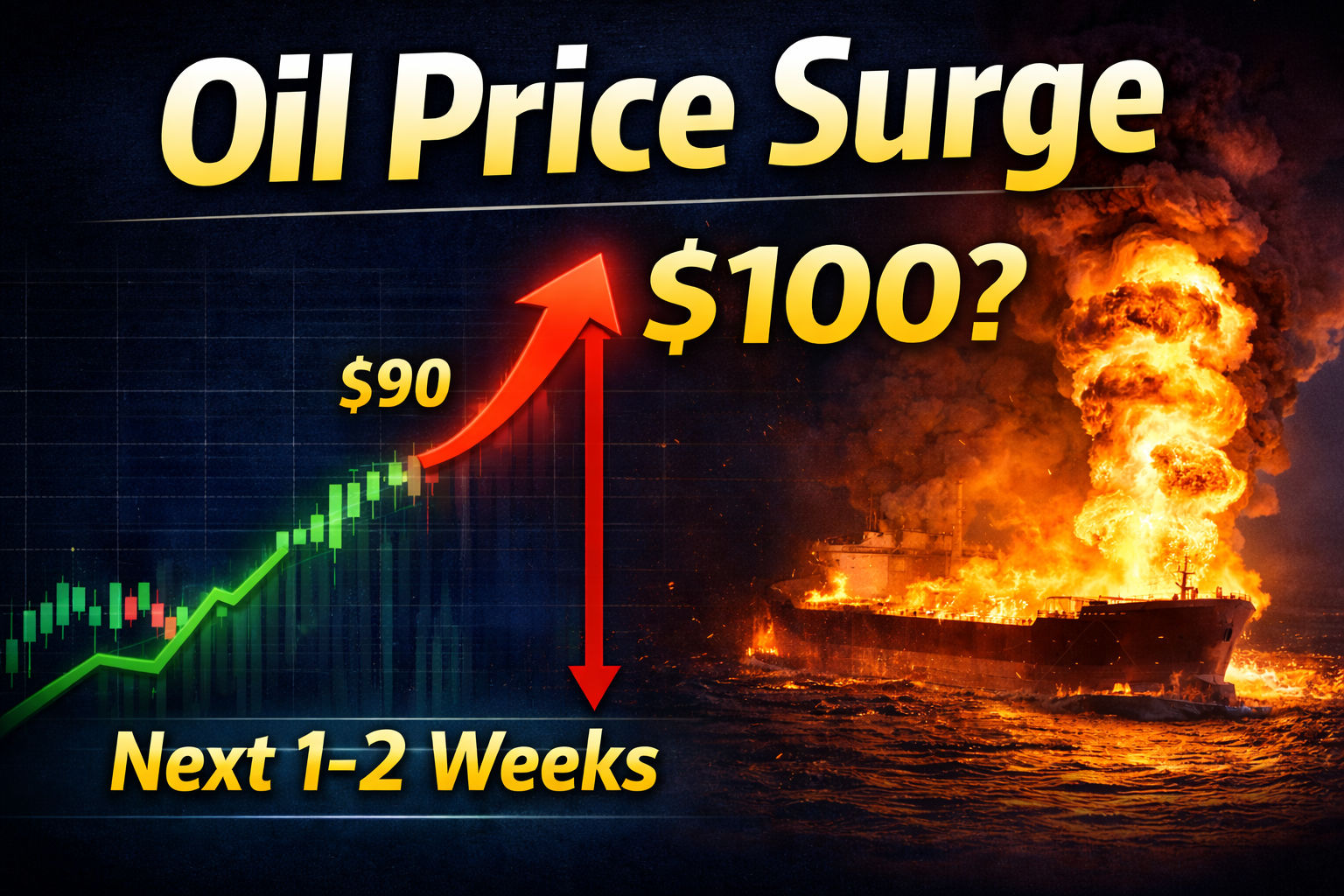
- Brent crude recently moved above $90 per barrel
- Some analysts warn prices could reach $120 per barrel if tensions continue
- In extreme scenarios, oil could even spike close to $150 per barrel if supply disruptions worsen.
These increases show how sensitive global energy markets are to geopolitical events.
Why Oil Prices Could Continue Rising
There are several reasons why oil prices may continue moving upward in the coming months:
Supply Disruptions:
If tanker routes remain blocked or unsafe, fewer barrels of oil will reach global markets.
Middle East Production Risks:
Several oil facilities in the region have already been affected by attacks or security threats.
Shipping and Insurance Costs:
Oil transportation costs are increasing rapidly as insurance companies raise risk premiums for ships passing through the Gulf region.
All of these factors can contribute to sustained upward pressure on oil prices.
Could oil prices cross $100?
Many market analysts believe that if the conflict continues for several weeks, oil could easily move above $100 per barrel.
Historically, geopolitical tensions in the Middle East have often triggered strong rallies in oil prices because the region produces a large share of the world’s energy supply.
Final Thoughts
The Iran conflict has once again highlighted how vulnerable global energy markets are to geopolitical risks. If tensions ease, oil prices may stabilise. However, if disruptions to shipping routes continue, the global oil market could face a significant supply shock.
For investors and market observers, the coming months will be crucial in determining whether oil prices stabilise or move toward the $100–$120 range.